
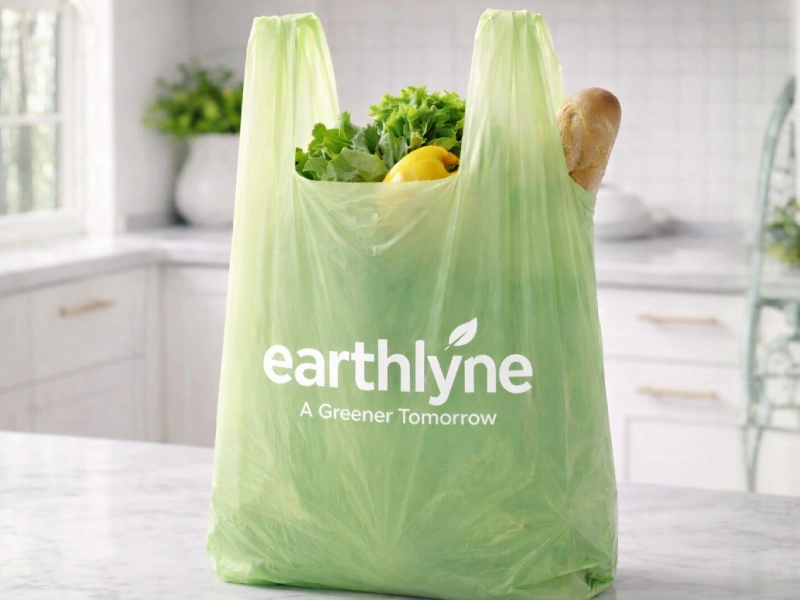
Plastic is on its way out. Compostable bags are taking its place. But many buyers still ask one thing:
What makes a bag truly compostable—and not just “eco-friendly” marketing?
At Earthlyne, we focus on clarity and compliance. Here’s how a compostable bag works—from raw material to breakdown—and why it matters for your business.
What Is a Compostable Bag?
A compostable bag breaks down into water, carbon dioxide, and biomass within a defined time under composting conditions. It leaves no toxic residue.
Plastic takes hundreds of years and leaves microplastics. Compostable materials return to the soil.
But note:
Many “biodegradable” bags only break into smaller plastic pieces.
True compostable bags meet strict standards and pass lab tests.
Raw Materials: Built from Plants
Compostable bags use plant-based polymers, not fossil fuels.
Main Materials:
- PLA (Polylactic Acid)
Made from corn or sugarcane. Adds structure and clarity. - PBAT
A biodegradable polymer. Adds flexibility and strength. - Starch Blends
Improve compostability and reduce plastic use.
Why it matters:
- Uses renewable sources
- Cuts fossil fuel dependence
- Enables full breakdown
Compostable bags start from plants—not oil.
Manufacturing: Controlled and Consistent
Material alone is not enough. Process matters.
Key Steps:
- Blending
Mix PLA, PBAT, and starch in fixed ratios. - Film Extrusion
Melt and form into thin film. - Conversion
Cut and seal into:
- Garbage bags
- Carry bags
- Industrial packaging
- Pet waste bags
- Testing
Check:
- Strength
- Load capacity
- Compostability
At Earthlyne, we match the performance of plastic without using it.
Certifications: Proof That Matters
Certification defines real compostability.
Key Standards:
- EN 13432 (Europe)
- ASTM D6400 (USA)
- OK Compost (TÜV Austria)
These confirm:
- Full breakdown in set time
- No visible residue
- Safe impact on soil
No certification = no true compostability.
What Happens After Disposal?
Compostable bags break down under the right conditions.
In Industrial Composting:
- Time: 90–180 days
- Conditions: Heat, moisture, microbes
- Output: Compost that enriches soil
Plastic pollutes. Compostable bags return to the cycle.
Note: Proper composting systems give best results, but compostable materials still break down safer than plastic.
Compostable vs Plastic
Feature | Compostable Bags | Plastic
Raw Material | Plant-based | Petroleum
Breakdown Time | 3–6 months | 100–500 years
Residue | Non-toxic | Microplastics
Impact | Returns to soil | Pollutes
The difference starts from production, not disposal.
Why Buyers Are Switching
Compostable bags now meet market demand and regulations.
Key Reasons:
- Regulations
Plastic bans are expanding. - Demand
Consumers prefer sustainable packaging. - Branding
Businesses improve image and pricing power. - Compliance
Certified products ease global trade.
Earthlyne’s Approach
We focus on verified compostability and export standards.
What we ensure:
- Certified raw materials
- Compliance with global norms
- Batch-level testing
- Export-ready solutions
- Traceable supply chain
We help businesses move away from plastic with confidence.
The Shift to Circular Use
Plastic follows a linear path:
Take → Use → Dispose
Compostable follows a cycle:
Grow → Use → Return to soil
This shift reduces waste and supports sustainability.
Final Take
A compostable bag is more than packaging. It is:
- Made from renewable inputs
- Designed to break down fully
- Built to reduce waste
It shows that performance and sustainability can work together.
Work with Earthlyne
If you want to replace plastic with certified compostable solutions, Earthlyne can support your transition.
The future of packaging is compostable.